Identifying and dating a French military insignia
By Augustin, founder of Athena Militaria Published , updated
A box of enamelled insignia, a few dozen coloured pieces, and no idea what they stand for. It is one of the most common groups found in an estate, and one of the worst handled: people look at the face, search for the name of the unit, and stop there. The decisive information is on the back.
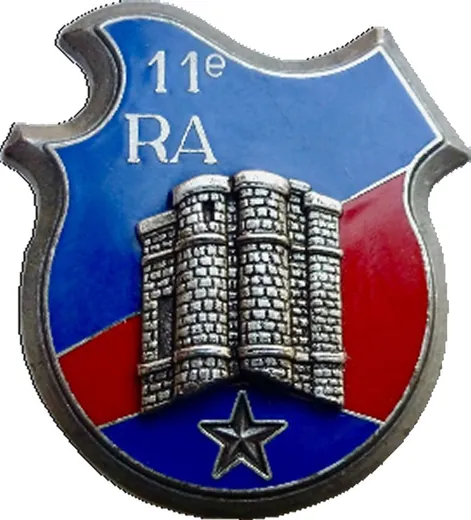
Knowing what you are looking at
The word “insignia” covers several families of object that are not read in the same way.
- The unit insignia, also called a regimental insignia: an enamelled metal piece belonging to a regiment, a battalion, a base, a school or a headquarters. It is the most widespread, and it is the subject here.
- The qualification badge, which certifies a skill: parachutist, pilot, diver, instructor. It is worn on the chest and follows precise regulations.
- The sleeve patch and cloth insignia, embroidered or printed, sewn onto the uniform.
- The beret badge and headdress devices, which belong to the dress regulations.
- The commemorative or association insignia, produced for an anniversary, a veterans' association or a pilgrimage: it looks like a unit insignia, it does not have the same status.
The distinction is not pedantry: it decides the method. A qualification badge is dated through the regulations, a unit insignia through its manufacture.
1. Turn the piece over before looking at the face
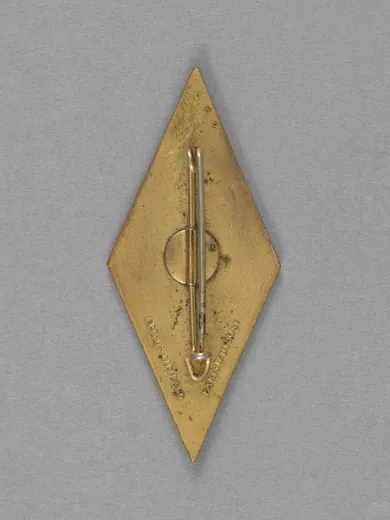
It is the one piece of advice in this guide that really changes the outcome. The face gives the subject; the back gives the period, the maker and often the authenticity.
The maker's name
Most French insignia carry a maker's mark on the back, raised or engraved. A few names come up constantly: Drago, Arthus-Bertrand, Augis, Delsart, Courtois, Fraisse, Ballard, Chobillon. Others are regional or short-lived.
Copy the mark out character by character, without interpreting it. A misread letter points to another workshop, and therefore to another period.
The address, which gives the range
This is the dating technique most used by collectors. A given maker changed address over the decades, and the wording on the back follows those moves. An insignia signed at a given address cannot have been struck before the workshop moved there.
Lists matching addresses to periods circulate in the specialist literature and in collectors' associations. They give a range, not a date: the same die may have been used for years.
The approval number
Many unit insignia carry a number preceded by a letter on the back. It refers to the approval of the insignia by the army's services, that is, to the validation of the design.
Beware of the most common misreading: that number dates the model, not the example you are holding. An insignia approved sixty years ago may have been restruck much later, with the same number on the back. The approval number therefore gives a birth date for the design, never the age of the piece.
2. The fastening system
How the insignia was fixed to the uniform is a marker of period, and an excellent indicator of reassembly.
- The pin, soldered or riveted to the back, with its catch.
- The spring clip, the bar that slides behind a pocket flap.
- The clamp and prongs, folded over behind the cloth.
- The screw post, with its nut.
- The loops, two rings on the back through which a leather strap passes.
Look at the solder itself: an original fastening and the back of the insignia have aged together, with the same oxidation. Bright solder on a patinated back, or the reverse, points to a repair, or to a modern fastening put on an old striking.
3. The manufacture
Three techniques are met with, and they do not age in the same way.
Fired enamel
True enamel is coloured glass fired at high temperature. It is hard, deep, slightly irregular at the surface, and it chips away in clean flakes rather than wearing down. Over time, fine crazing may appear.
Cold enamel and paint
Coloured resins applied cold are more regular, flatter, sometimes slightly domed, and they wear by scratching. They dominate recent production and reproductions.
Striking and gilding
A struck insignia shows crisp relief and clean hollows; a cast one has softer edges and sometimes minute bubbles. Gilding and silvering wear at the raised points, exactly where the piece rubbed against the cloth. Even gilding on an otherwise worn piece should draw your attention.
4. Only then, read the face
The subject, the motto, the unit number, the symbols of the arm of service. It is what everyone looks at first, and it is what is copied most easily.
Note down everything written, including Roman numerals and abbreviations. The symbols come next: grenade, anchor, hunting horn, wing, lightning bolts, cross of Lorraine, heraldic animals. The same symbol can belong to several arms; it is the combination that places the unit.
If the insignia comes with other pieces from the same estate, treat the group as a whole: an insignia, a service record book and a photograph confirm one another. The general approach is described in inheriting military items.
Restrikes, reproductions and souvenir insignia
Three different situations, often confused.
A restrike is a new official manufacture of the same insignia, years after the first. There is nothing illegitimate about it, but it does not have the value of a period striking. The back usually gives it away: a different maker, another type of fastening, cold enamel where the original was fired enamel.
A reproduction sets out to imitate a sought-after piece. The classic clues are a complete absence of marking on the back, a lighter weight, soft relief, gilding that is too even and flat enamel. The general checks are gathered in spotting a militaria fake.
A souvenir insignia, finally, was made for a veterans' association, an anniversary or an event. It is genuine, but it says nothing about a soldier's service.
Keeping and displaying
Do not clean an insignia with metal polish: buffing attacks the gilding and rounds off the relief. A soft dry cloth is enough. Do not detach an insignia from its original mount, and do not straighten a bent pin.
Store the pieces flat, separated from one another, away from damp. Enamel cracks on impact, and two insignia rubbing together in a box scratch each other. The principles that apply to the rest of a collection are set out in caring for militaria without destroying its value.
What I cannot tell you here
I cannot attribute your insignia to a particular unit without seeing it, back included. No guide replaces comparison with documented examples, and French insignia run to tens of thousands of models.
Photograph the face, the back and the fastening in daylight, with a ruler for scale, then have the piece looked at: ask the community. And if you are after points of comparison, the catalogue is arranged by period, in particular First World War medals and decorations and the whole catalogue.
Frequently asked questions
Where is the useful information on a military insignia?
On the back, not the face. The back carries the maker's mark, often the address, sometimes an approval number, and above all the fastening system. The maker and the address give a range of dates; the fastening and its oxidation say whether the piece has been reassembled.
Does the number on the back date an insignia?
It dates the model, not the example. An approval number corresponds to the validation of the design by the army's services. The same insignia may have been restruck decades later with that number unchanged. It is the manufacture, not the number, that dates the piece you are holding.
How can true enamel be told from modern paint?
Fired enamel is baked glass: hard, deep, slightly irregular, it chips away in clean flakes and may show fine crazing. Resins applied cold are flatter and more regular, and they scratch rather than chip. They dominate recent production and reproductions.
Is a restrike worth anything?
It is, but not what a period striking is worth. A restrike is a later official manufacture of the same model: it is genuine, it simply was not worn during the period concerned. The back usually shows it, through a different maker, another fastening or a different enamel.
Should an enamelled insignia be cleaned?
Not with metal polish. Buffing attacks the gilding and rounds off the relief, which is precisely what makes a striking recognisable. A soft dry cloth is enough. Do not detach the insignia from its original mount and do not straighten a bent pin.
What does a French military insignia mean?
It designates a unit (regiment, battalion, squadron, ship), a speciality or a qualification. Its symbols tell the unit's story: an animal or monument from its garrison town, the colour of its branch, an allusion to a battle or a motto. Reading an insignia means finding the unit through these symbols, then dating the striking from what the back says.
What is the difference between a unit insignia and a qualification badge?
A unit insignia identifies a formation: regiment, battalion, base, school. A qualification badge certifies an individual skill, such as parachutist, pilot or diver, and follows precise wearing regulations. The two are dated by different routes: manufacture for the first, regulations for the second.