Caring for military leather, textile and metal: the minimum rule
By Augustin, founder of Athena Militaria Published
In conservation, the most profitable action is almost always the one you do not take. An old military object owes part of its value to its original condition, patina and marks of use included. The aim is not to make it look good: it is to stop what is damaging it, and nothing more.
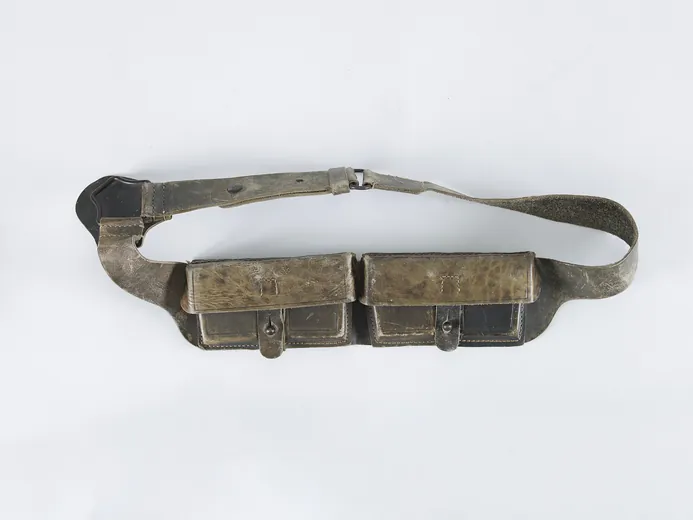
This guide separates two things that are constantly confused: cleaning, which is about appearance and often destroys information, and conservation, which is about slowing deterioration. The second is almost always justified. The first almost never.
The rule that overrides all the others
Every intervention must be reversible and minimal. If an action cannot be undone, there needs to be a very good reason for doing it.
Three questions before touching anything at all. Am I acting against active deterioration, or for appearance? Can what I am about to remove carry information: a marking, a patina, a trace of use? Would I be able to go back?
If you are unsure, the correct order is: stabilise the environment first, identify next, intervene last, and only if necessary.
The environment, which does 90% of the work
Before any product comes the place where the object is kept. It is the most effective lever and the least risky.
- Neither attic nor cellar. Temperature swings on one side, permanent damp on the other. They are the two worst places, and they are the two most common.
- A normally heated room, at stable temperature and humidity. Stability matters more than the exact figure.
- Away from direct light. Sunlight fades textiles and weakens fibres, irreversibly.
- No sealed plastic. Airtight bags and watertight boxes trap moisture and create condensation. Prefer cardboard, acid-free tissue paper, a cotton cover.
- Separate the materials. Avoid prolonged contact between leather and metal: tannin attacks metals. Also avoid direct contact between dissimilar metals.
None of the above is expensive, and it is enough to stop most of the deterioration already under way.
Leather
This is the material on which the most damage is done, with the best of intentions.
What not to do
- No coloured polish, no shoe products. The pigments soak in and do not come out.
- No silicone grease and no modern car-leather product. They darken the surface and leave a film.
- No cooking oil: it goes rancid and attracts pests.
- No water, no soaking. Old leather that has been wetted distorts and hardens as it dries.
- No heat for drying, never a radiator or a hairdryer.
What is reasonable
Dry dusting, with a soft brush or a dry cotton cloth. That is all a leather needs in the vast majority of cases.
Leather that is very dry and brittle may justify a neutral conservation product, applied in a very thin layer, after testing on a hidden area. When in doubt, do not do it: dry but intact leather is worth more than fed and stained leather.
Whitish mould is treated first by drying out the environment, then by very light dry brushing, away from the other items.
Textiles: wool, cotton, canvas
The first enemy is not dirt, it is moths.
Moths
Inspect regularly, in particular the folds, the seams and the linings. At the slightest suspicion, isolate the item from the others.
Prolonged cold is the least aggressive treatment for textiles: several days in the freezer, the item sealed in a bag, will break a cycle. Then let it return to room temperature without opening the bag, to avoid condensation.
Avoid naphthalene and volatile products in direct contact with the fabric.
Washing
Do not wash. Water sets certain stains, shrinks wool and erases the ink markings applied inside garments, which are often the most useful information the item carries.
Vacuum dusting, at low power and through a stretched piece of muslin to protect the fabric, is the only routine intervention that is justified.
Storage
Flat for preference, or on a wide padded hanger so as not to mark the shoulders. Pad the folds with acid-free tissue paper to avoid fibre breaks. Never hang a heavy item by a fragile seam.
Before storing a tunic or greatcoat, record its labels and stamps: they are what date it. See dating a French military uniform.
Metal
Here the temptation to polish is almost irresistible. It is also the most destructive.
Patina and rust are not the same thing
The patina is a stable, protective layer that contributes to dating and to value. It is left alone.
Active rust, orange and powdery, coming away on the finger, spreads and destroys the metal. It justifies an intervention.
Knowing how to tell the two apart is the essence of the subject. When in doubt, start by drying out the environment and observe for a few weeks.
What not to do
No metal polish, no steel wool, no abrasive, no chemical stripping bath. Polishing removes the patina and sometimes the stamps themselves. A belt plate made shiny loses part of what allowed it to be dated, and a good share of its market value.
What is reasonable
Against active rust: reduce the humidity, dust dry, and where appropriate stop the spread with very light, localised work, on the active area only. A painted item, a helmet in particular, is never stripped: the original paint is a dating element and part of the value.
For a valuable object or extensive corrosion, the opinion of a conservator-restorer is proportionate. The cost bears no comparison with that of a damaged piece.
On a helmet, the original paint is among the first criteria of value: valuing an Adrian helmet shows why.
Papers and photographs
These are often the most fragile elements of an estate, and the ones that carry the most information.
Handle with clean, dry hands. Do not fold, and do not force open a brittle document. Remove paper clips and metal staples, which rust and leave marks. Store flat, in acid-free sleeves, away from light. Never use adhesive tape to repair a tear: it is irreversible and it stains the paper as it ages.
Reading a document or dating a photograph before storing it: reading and keeping military photographs and documents.
Before selling
The question always comes up: should an item be presented cleaned? No. An informed buyer prefers an untouched item to an improved one, and spots excessive cleaning immediately. What sells is sharp photographs, a factual description and honesty about condition.
Photograph before any intervention, whatever it may be. If you decide to act, you will then have a record of the earlier state.
Next steps: inheriting militaria, where to start, recognising fake militaria, and to publish, list an item.
To place the price of a piece, see valuing a military item; for what may be sold freely, selling military items in France.
Frequently asked questions
Should a military item be cleaned before selling it?
No. An informed buyer prefers an untouched item to an improved one, and spots excessive cleaning immediately. Polishing metal erases the patina and sometimes the stamps; washing a textile sets the stains and erases the internal markings. What sells is sharp photographs and an honest description of condition.
How should old military leather be fed?
In the great majority of cases, it should not be. Dry dusting with a soft brush is enough. No coloured polish, no silicone grease, no car-leather product, no cooking oil: they all soak in, darken or stain irreversibly. Very dry leather may justify a neutral product in a very thin layer, after testing on a hidden area.
How do you deal with moths in a uniform?
Isolate the item from the others immediately. Prolonged cold is the least aggressive treatment: several days in the freezer, the item sealed in a bag, break the cycle. Let it return to room temperature without opening the bag, to avoid condensation. Avoid naphthalene in direct contact with the fabric.
Should rust be removed from a military item?
A distinction has to be made between patina and active rust. The patina is a stable layer that contributes to dating and to value: it is left alone. Active rust, orange and powdery, spreads and destroys the metal: it justifies a light, localised intervention, after drying out the environment. No abrasive, no steel wool, no metal polish.
Where should a militaria collection be kept?
Neither in the attic nor in the cellar, which are the two worst places. A normally heated room, at stable temperature and humidity, away from direct light. Avoid sealed plastic bags, which trap moisture; prefer cardboard, acid-free tissue paper and cotton covers. Separate leather from metal, as tannin attacks metals.
How should military documents and photographs be preserved?
Flat, in acid-free sleeves, away from light, and handled with clean, dry hands. Remove the paper clips and metal staples, which rust and mark the paper. Never force a brittle document and never use adhesive tape to repair a tear: it is irreversible and it stains as it ages.