Selling militaria in France: what is allowed, what is not
By Augustin, founder of Athena Militaria Published , updated
This is the question that stops the most sellers, and the one on which the most categorical claims circulate. This guide is not legal advice: it sets out landmarks, states what the site's terms of sale allow, and flags the points that need checking case by case rather than settling on a forum.
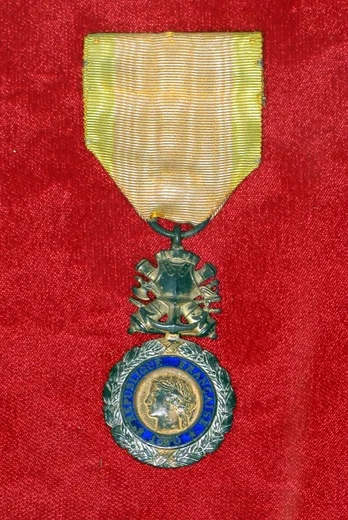
A word of caution first, and a serious one. The law applying to militaria touches on weapons regulations, the code du patrimoine and the code pénal. It changes over time, and how it applies depends on the precise item you have in your hands. Nothing that follows replaces the advice of a legal professional or of the competent authorities.
The principle: most militaria may be sold freely
Uniforms, headgear, field equipment, mess tins, water bottles, haversacks, webbing, binoculars, documents, photographs, maps, regimental insignia: the greater part of what an estate contains raises no particular difficulty.
The catalogue categories reflect this: First World War, Second World War, Cold War, with types ranging from uniforms to documents. The difficulties are concentrated in three families: firearms, ammunition, and the emblems of dissolved regimes.
Firearms and deactivated pieces
French law classifies weapons by category, from A to D. The status of a deactivated weapon depends on three things: the date on which the deactivation was carried out, the standard applied, and the certificate that accompanies it.
Two received ideas to set aside. The age of a weapon says nothing about its status. And an old deactivation does not amount to a certificate that is valid today: the requirements were tightened by Implementing Regulation (EU) 2015/2403.
On Athena Militaria, the rule is explicit in the terms of sale: working firearms of categories A, B, C and D1 that have not been deactivated within the meaning of that regulation may not be offered for sale. Deactivated pieces are accepted subject to the regulations in force, provided they are clearly identified as such in the listing.
In practice, if you hold a weapon whose status you do not know: do not put it online, and have it examined by a gunsmith or by the competent authorities. That is the only way to obtain an answer that holds good for your own piece.
Ammunition: the rule is simple
Live ammunition, explosives, grenades, explosive devices, including inert ones that are not certified: prohibited from sale on the site, without exception.
And above all, do not handle them. If you find a shell, a grenade or a detonator in an estate, contact the gendarmerie or the police, who will refer the matter to the bomb disposal service. The intervention is free of charge and leads to no prosecution. Old ammunition remains dangerous, even after several decades, and a relative's assurance that it is empty is worth nothing.
What to do with a shell, a grenade or cartridges is set out in old ammunition: what to do.
Edged weapons
Bayonets, sabres, daggers, fighting knives. Their regime is generally more relaxed than that of firearms, but three things that are often confused need to be distinguished: possession, transport and carrying on the person.
Being able to keep an object lawfully at home does not mean being able to transport it freely, nor to carry it on you. Transport must have a legitimate reason, and handing an item over in person during a sale is not a neutral situation in this respect. Sending it in a properly packed and declared parcel is generally the simplest route.
To place a bayonet before describing it: identifying a French bayonet.
The emblems of dissolved regimes
This is the most delicate point, and the one on which categorical assertions are the most frequent and the least reliable.
Article R645-1 of the code pénal penalises the wearing and the public display of certain emblems recalling organisations declared criminal, with an exception relating to historical evocation. How that framework fits with possession by a collector and with sales between private individuals requires case-by-case verification with a legal professional. I will not settle the question here, and you should be wary of any source that does so in a single sentence.
What the site does lay down is clear: any item glorifying war crimes, crimes against humanity, Nazism or terrorism is prohibited from sale, as our terms and conditions state.
The editorial line that follows from this is simple. These objects are handled as historical documents: they are described, dated and placed in context. They are not staged and they are not glorified. A factual listing, without emphasis and without theatre, is at once the most compliant and the most credible.
To describe a helmet from this period factually, markings and decals included: identifying a German helmet.
The other prohibitions to know about
- Objects from illegal archaeological digging. The ground of former battlefields is protected, and the sale of objects unlawfully taken from it is prohibited.
- Objects of human origin, including bones and hair.
- Official decorations still in force awarded to an identifiable person, without their consent. This is a point that is often overlooked: a recent named medal is not a collectable like any other.
Writing a listing that protects you
Three habits, whatever the piece.
- Describe, do not assert. Write what you observe, and flag what you have not been able to determine. “I have not identified this stamp” is worth more than an approximate attribution.
- Declare everything that must be declared: reproduction, deactivated piece, replaced component, repair. It is a contractual obligation on the site and it is your best protection in the event of a dispute.
- Photograph the faults as much as the qualities, and attach any documents you hold, the deactivation certificate in particular.
When everything is clear, listing is free and payment is secure: place a listing. How it all works in detail is described in how it works.
On the initial sorting of an inherited group, see inheriting militaria, where to begin. On the authenticity of pieces, see recognising fake militaria.
To set a fair price, the method is in valuing a military item.
Frequently asked questions
Can a deactivated weapon be sold in France?
That depends on the date of deactivation, the standard applied and the certificate that accompanies it. An old deactivation does not amount to a certificate that is valid today, the requirements having been tightened by Implementing Regulation (EU) 2015/2403. On the site, deactivated pieces are accepted subject to the regulations in force and provided they are clearly identified as such. If you are in any doubt about a particular piece, have it examined by a gunsmith.
Where can I sell military items?
Several routes exist: listing sites between collectors, including Athena Militaria where listing is free; auction houses, which charge fees; militaria fairs; dealers, who buy to resell. For an identified piece, a detailed listing reaches collectors directly; for a large lot or a rare piece, an auction house may be worth it.
What should be done with a grenade or a shell found in an estate?
Do not handle it, do not transport it and do not offer it for sale, even if you are assured that it is inert. Contact the gendarmerie or the police, who will refer the matter to the bomb disposal service. The intervention is free of charge and leads to no prosecution. Ammunition and explosive devices, including inert ones that are not certified, are prohibited from sale on the site.
Can a bayonet or a sabre be sold?
The regime for edged weapons is generally more relaxed than that for firearms, but a distinction has to be made between possession, transport and carrying on the person, which come under different rules. Being able to keep an object does not mean being able to transport it freely. Sending it in a properly packed parcel is generally the simplest route.
Are items bearing the emblems of dissolved regimes prohibited?
Article R645-1 of the code pénal penalises the wearing and the public display of certain emblems, with an exception relating to historical evocation. Its application to possession by a collector and to sale requires case-by-case verification with a legal professional. The site's terms of sale prohibit in any event any item glorifying Nazism or crimes against humanity.
Can a named military medal be sold?
Official decorations still in force awarded to an identifiable person may not be offered for sale without that person's consent. This is a prohibition that is often overlooked. Older decorations, unnamed ones, or those belonging to an order that is no longer in force come under a different regime.
Can an inherited weapon be sold?
It depends on what it is. A deactivated firearm with its certificate, an edged weapon or a reproduction may be sold freely to an adult. A firearm in working order falls under the categories of the French internal security code: the heir must declare it, have it deactivated or sell it through a gunsmith, never between private individuals through a listing. Ammunition is a matter for bomb disposal.
What is the risk in publishing a non-compliant listing?
On the site, the withdrawal of the listing and, depending on the seriousness, suspension of the account, as the terms and conditions provide. Beyond that, the consequences are a matter for the law applying to the item concerned. Caution costs little: do not publish what you are not sure of, and have it checked beforehand.