WW1 militaria for sale
Listings for sale
Guides for these pieces
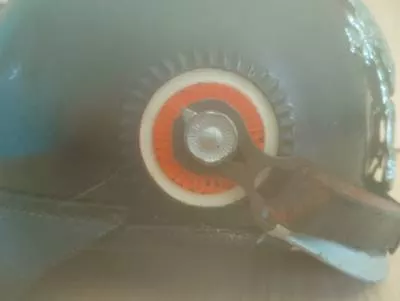
- Identifying a 1915 Adrian helmetThe French WW1 Adrian helmet: how many parts, which crest, which badge, which liner. How to tell it from the 1926 model and from copies.
- Identifying a French First World War medalCroix de guerre, Médaille militaire, commemorative, Victory and Verdun medals: how to identify a French WW1 decoration and what makes its value.
- Reading a Croix de guerre 1914-1918What the stars, palms and reverse date of a French WW1 Croix de guerre really mean, how to trace the soldier who earned it, and what drives its value.
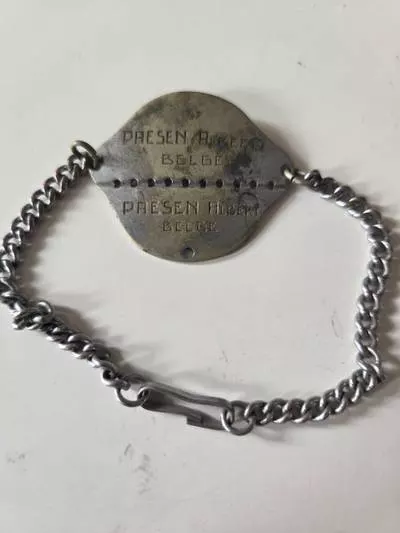
- Reading a military identity disc and tracing the soldier who wore itThe 1881 oval disc, the 1918 breakable tag, American, British and German tags: what each marking means, and how to get from the service number to the man.
Have pieces from this period? List them for free: they will be seen by the collectors browsing this page.
Collecting Great War militaria
From 1914 to 1918, France mobilised some eight million men. No earlier war had equipped so many combatants, nor produced so many standardised objects: it was the first conflict to leave behind mass-produced equipment, made in series and marked as such. A century later, that abundance is still felt on the market, despite salvage, melting down and the wear of time.
The emblematic pieces
The Adrian helmet, adopted in 1915, is the emblematic piece of the period and the first modern helmet issued on a large scale in the French army, after the steel skullcap worn under the kepi from February 1915. The horizon-blue uniform took over during that same year, replacing a dress inherited from the previous century. Alongside regulation issue, trench art holds a special place: embossed shell cases, lighters, rings and objects made at the front, often impossible to verify and yet much sought after.
Documents and points of caution
Documents rarely stay with the object, and that is precisely what makes them valuable: service book, citations, veteran's card, group photographs. A group attributed in this way anchors the piece in a unit and a service history, and sells well above an anonymous piece. To trace a soldier's decorations, see tracing a French WW1 soldier's decorations.
Helmets had a long life after 1918: repainted, reassembled, refitted with badges that are not their own, they call for a careful examination. Our guide to identifying a 1915 Adrian helmet sets out the points to check. And trench art went on being made long after the war, for the souvenir market: dating it rests on style and provenance, rarely on a marking.