Cold War misc. items for sale
Listings for sale
Pieces in this section are listed by collectors themselves, as they put them up for sale.
Have one to sell? Listing is free. List a piece
Other pieces for sale from the same period
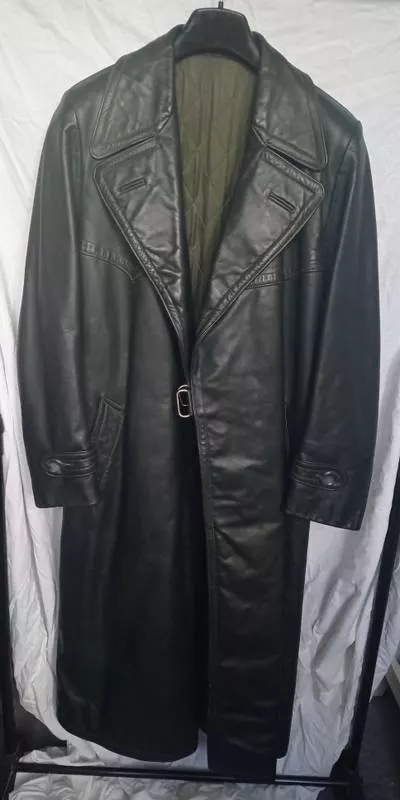
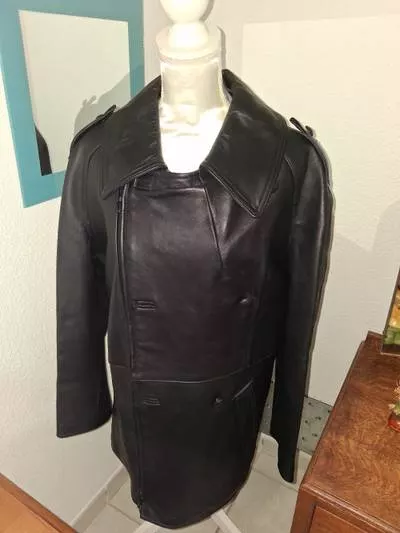
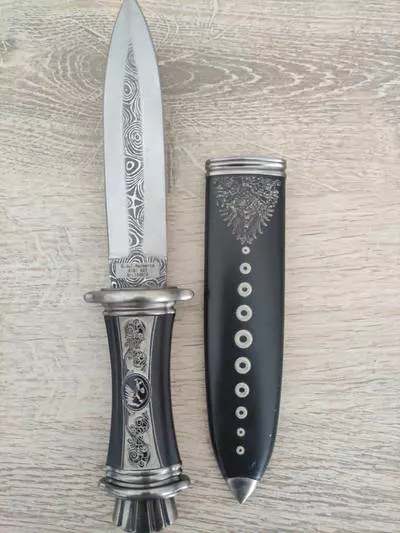
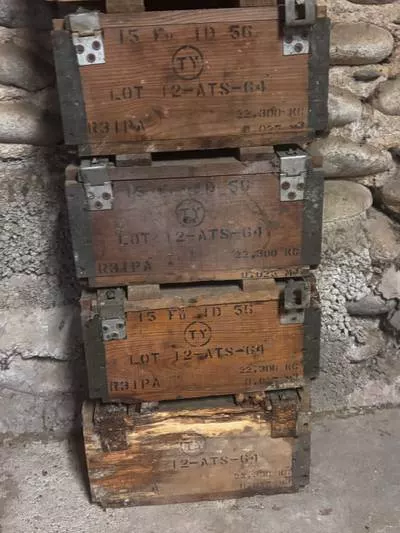
Guides for these pieces
- Cold War militaria, French, NATO and Warsaw Pact: what to collect and how to date itFrench M51 helmets, NATO stock numbers, East German and Soviet kit: what collectors look for from 1947 to 1991, how to date it, and the traps to avoid.
- Identifying and dating a French military insigniaThe back of an insignia says more than its face: maker, fastening, approval number. How to place a striking and spot a recent restrike.
- Spotting a reproduction or a fake: the seven-point methodAn aged reproduction fools the eye, not the method. Seven concrete checks to tell a period piece from a copy before you buy.
Collecting Cold War instruments and souvenirs (1947-1991)
This heading takes in whatever belongs neither to the uniform, nor to field equipment, nor to paperwork: orientation and sighting instruments, watches and compasses, garrison objects, unit souvenirs, fragments and remnants of the border that divided Europe. For a period whose equipment was mass-produced, it is often these objects that tell a particular story, that of a unit, a garrison or a man.
Luminous instruments
Luminous hands and dials call for a precaution before any other question. Andra, the French national agency for radioactive waste, states that old watches, alarm clocks, compasses, aircraft dials and night sighting systems received luminous paint containing radium, then tritium, and that these objects are often held by collectors of military items. Hands that still glow after two days in complete darkness indicate a radioactive object. The Canadian Nuclear Safety Commission places the use of radium paint on military items up to the 1960s, and points out that paint which no longer glows remains radioactive. The quantities are small and the case acts as a shield as long as it is intact: do not open it, do not take it apart, do not throw it away, and contact Andra to dispose of it. A seller who knows what the dial is made of says so in the listing.
Reading a NATO stock number
On Western-issue equipment, the NATO stock number, when it appears on the object or its label, is read in three parts. The first four digits give the group and class of the item; according to the French defence materiel identification centre, group 84, for example, covers clothing and individual equipment. The next two digits designate the country that created the number, 14 for France. The last seven are allocated by the system and say nothing more. The country code therefore tells you who codified the item, not necessarily which army used it.
Garrison souvenirs and pieces of the wall
The rest of the heading is made up of souvenirs: tankards, trays, pennants and plaques engraved with the name of a unit or garrison. An inscription, a badge and dates consistent with the unit's history are worth more than fine condition. Berlin forms a family of its own: when the wall fell, ECPAD recalls, the 46th Infantry Regiment and the 11th Chasseurs Regiment carried out most of the surveillance of the French sector. The wall, whose construction East Germany began on the night of 12 to 13 August 1961, fell on the night of 9 to 10 November 1989, and pictures from the winter of 1989-1990 shown by ECPAD already show Berliners chipping pieces off it and vendors offering them for sale. A fragment of concrete therefore cannot be authenticated on its own: only documented provenance links it to the wall. Our guide to Cold War militaria gives the other reference points for the period.
The Athena Militaria catalogue
Athena Militaria brings together listings from collectors, flea-market hunters and heirs with a passion for history. Each piece is put online by its seller, with their own photos, description, condition and shipping location: they set their price and delivery options, you write to them directly and can offer yours. The filters at the top of the page narrow your search by price, condition, town or date of publication, and the arrangement by period and sub-category takes you straight to your collecting field.
Buying with confidence
Before committing, look at the photos in full size and read the description of the condition. Markings are often the most telling clue: maker's stamps, hallmarks, numbers or sizes inside a helmet or on a cap. If they do not show, ask the seller for them through the messaging, along with more photos or details on the provenance, then make an offer. When the listing shows “Buy”, you pay through Stripe with Buyer Protection: the seller is only paid after you confirm receipt. Our team checks listings of weapons and Second World War pieces before publication. The whole process is explained on the how it works page and in security and payments. Want to part with a piece? Publish a listing in a few minutes.