Algerian War militaria for sale
Listings for sale
Guides for these pieces
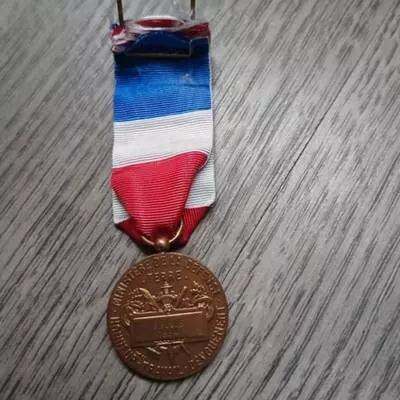
- French Algerian War medals: recognising them and tracing a veteran's entitlementsThe French AFN medal and its Algérie, Tunisie, Maroc clasps, the Cross for Military Valour, the Nation's recognition title: reading them, tracing the records.
- Identifying and dating a French military insigniaThe back of an insignia says more than its face: maker, fastening, approval number. How to place a striking and spot a recent restrike.
- French parachutist wings and the airborne beret badge: recognising them, dating them, tracing the holderFrench para wings: how to read the parachutist brevet and its engraved number, related brevets, the paratrooper beret badge, foreign wings and copies.
- Reading and keeping military photographs and documentsThe back of a postcard dates the print, the service record book opens the archives. How to identify a soldier, and store papers without destroying them.
- The Croix du combattant: what it says about an ancestor, and where to find his cardThe French Combatant's Cross of 1930: who is entitled to it today, Doumenc's design and ribbon, the volunteer's cross, and how to find an ancestor's card.
- Selling militaria in France: what is allowed, what is notMost medals, helmets and uniforms can be sold freely in France. What the law regulates (weapons, ammunition, emblems) and the listing that protects you.
Have pieces from this period? List them for free: they will be seen by the collectors browsing this page.
Collecting Algerian War militaria
From the attacks of the night of 31 October to 1 November 1954 to the ceasefire of 19 March 1962, the day after the Évian Accords, the Algerian War drew in France's conscripts, whose service was extended to twenty-seven months in 1956. That is what sets it apart from Indochina for the collector: its souvenirs reached a very large number of French families, with the photographs, letters and papers these young men brought home, and some witnesses are still alive.
A vocabulary to know
During the conflict, official texts spoke of security and law-and-order operations in North Africa, and it took the law of 18 October 1999 for “Algerian War” to replace “operations carried out in North Africa”. Objects keep the trace: the commemorative medal of 1958 is that of the “opérations de sécurité et de maintien de l'ordre”, with an “Algérie” clasp, and bars and papers alike speak of “AFN”, French North Africa. Our page on Algerian War decorations describes them one by one.
Where to start
Start with photographs: conscripts took many pictures to while away the wait for “la quille”, the day they would be discharged, and some of their shots illustrated Le Bled, a journal distributed by the army's psychological action service; they also wrote to their families. Then look for the service book and unit insignia. Brought together around one man, with his decorations, these objects tell a story; scattered, they no longer tell anything.
Dating an insignia, respecting the living
For insignia, the back gives a date range: with Drago, “DRAGO Paris”, with no address, covers 1954 to 1988, and an insignia of those years, that of the Engineer Command in French West Africa, struck between 1956 and 1958 and held at the Musée de la Libération de Paris, carries “H 712 DRAGO PARIS” on the back. The approval number dates the design, never the example, and an insignia may have been restruck decades later: our guide to identifying a French military insignia gives the method. A decoration awarded to a living, identifiable person is sold here with its holder's consent, and the period's firearms, of post-1900 models, are collected deactivated, with a declared acquisition: see selling militaria legally in France.
Tracing the man
Mémoire des hommes publishes the database of those who died for France in the Algerian War and the fighting in Morocco and Tunisia, and the French Army's citations since 1914 are at the Pau archive centre of the Service historique de la Défense. Our guide to military photographs and papers explains how to read a service book or an album.
The Athena Militaria catalogue
Athena Militaria brings together listings from collectors, flea-market hunters and heirs with a passion for history. Each piece is put online by its seller, with their own photos, description, condition and shipping location: they set their price and delivery options, you write to them directly and can offer yours. The filters at the top of the page narrow your search by price, condition, town or date of publication, and the arrangement by period and sub-category takes you straight to your collecting field.
Buying with confidence
Before committing, look at the photos in full size and read the description of the condition. Markings are often the most telling clue: maker's stamps, hallmarks, numbers or sizes inside a helmet or on a cap. If they do not show, ask the seller for them through the messaging, along with more photos or details on the provenance, then make an offer. When the listing shows “Buy”, you pay through Stripe with Buyer Protection: the seller is only paid after you confirm receipt. Our team checks listings of weapons and Second World War pieces before publication. The whole process is explained on the how it works page and in security and payments. Want to part with a piece? Publish a listing in a few minutes.